Create:
June 21, 2024
Why Gate Valves Should Not Be Used for Throttling

In EPC projects and industrial systems, gate valves are often misunderstood. While they are excellent isolation valves, gate valves should never be used for throttling or flow regulation. Doing so can lead to premature failure, leakage, and even safety risks.
This article explains why gate valves are unsuitable for throttling, using engineering logic commonly referenced in EPC specifications.
1. Gate Valves Are Designed for Full Open or Full Close Only
Gate valves operate by lifting a gate completely out of the flow path or lowering it fully to stop flow.
They are not designed to hold intermediate positions.
When partially open:
- The gate sits directly in the flow stream
- Flow becomes highly turbulent
- The valve experiences uneven loading
EPC implication: Gate valves are isolation devices, not control valves.
2. Severe Vibration and Chatter Occur During Throttling
When a gate valve is used in a partially open position:
- High-velocity fluid strikes the gate edge
- The gate begins to vibrate or “chatter”
- This vibration transfers to the stem and bonnet
Over time, this causes:
- Stem bending
- Loosened components
- Loss of sealing integrity
Result: Unstable operation and shortened valve life.
3. Rapid Seat and Gate Erosion
Throttling forces fluid to pass at high velocity through a narrow opening:
- The gate edge and seat are exposed to continuous erosion
- Cavitation may occur in liquid service
- Solid particles accelerate wear in dirty media
Once erosion starts:
- The valve can no longer seal properly
- Internal leakage becomes permanent
EPC takeaway: Seat damage from throttling is not repairable in many designs.
4. Poor Flow Control Accuracy
Gate valves offer:
- No predictable flow characteristic
- No linear or equal-percentage control
- No fine adjustment capability
Small handwheel movements can cause:
- Large, sudden flow changes
- System instability
- Control difficulty during commissioning
Compared to globe or control valves, gate valves provide zero precision.
5. Increased Risk of Water Hammer
Partial closure of a gate valve can:
- Restrict flow suddenly
- Cause pressure surges
- Trigger water hammer events
This is especially dangerous in:
- Long pipelines
- Pump discharge lines
- High-pressure systems
System-level damage can occur well beyond the valve itself.
What Should Be Used Instead?
Globe valves and control valves.
Final Thoughts
Gate valves play a critical role in industrial systems—but only when used correctly. Throttling with a gate valve leads to vibration, erosion, leakage, and early failure, creating unnecessary risk and cost for EPC projects.
Use gate valves for isolation. Use proper globe and control valves for regulation.
Latest news

Leadership Philosophy
February 14, 2025
Read more
Major Mission
December 25, 2024
Read more
Market Trends in the Valve Industry: Key Developments and Projections for the Next Five Years
December 26, 2024
Read more
Most Valve Failures Are Material Failures, Not Design Failures
December 29, 2025
Read more
The Six Main Types of Industrial Valves — and When to Use Them
December 30, 2025
Read moreWhy Gate Valves Should Not Be Used for Throttling
December 30, 2025
Read more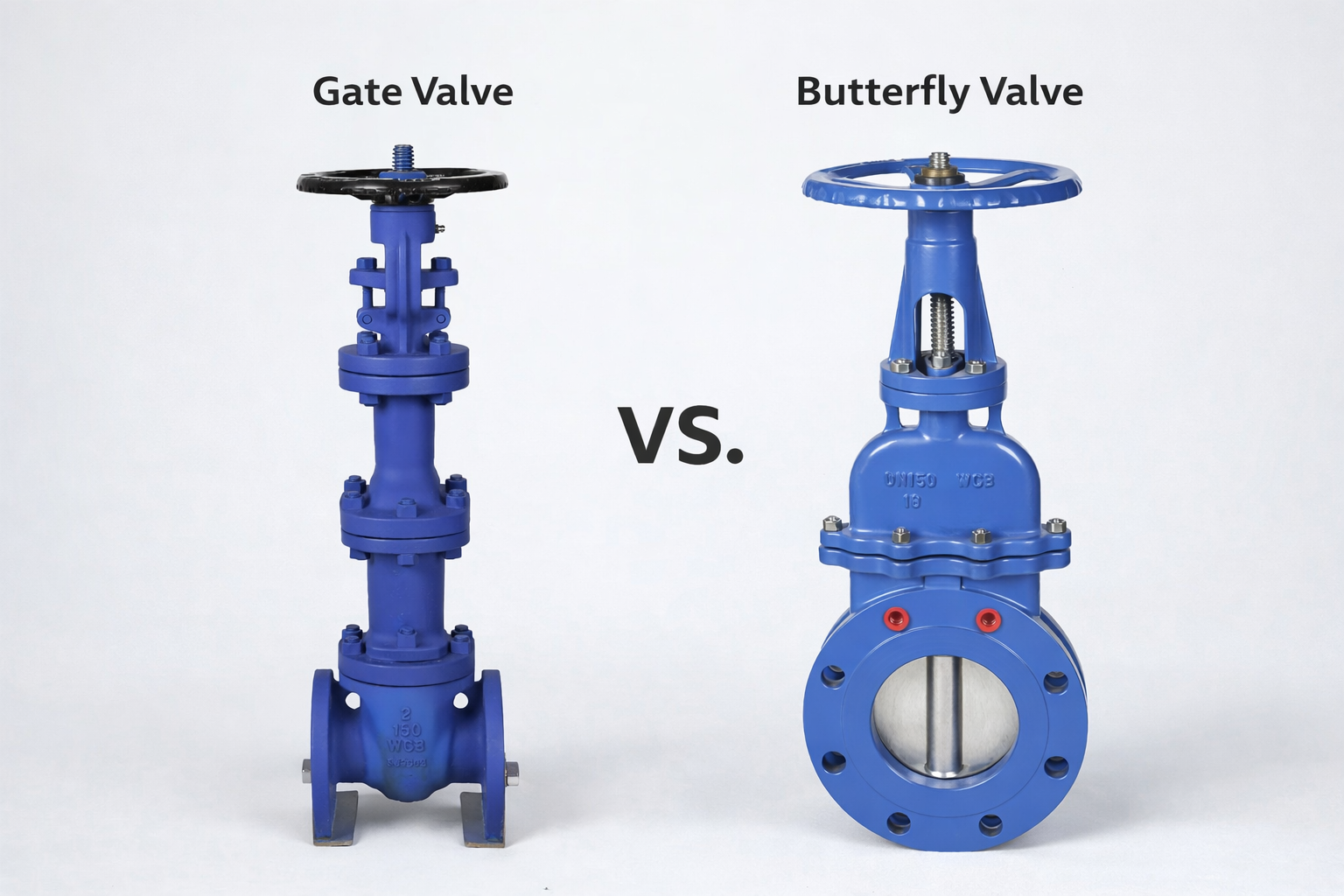
Butterfly vs Gate Valves: Choosing the Right Valve for Large Pipelines
January 1, 2026
Read more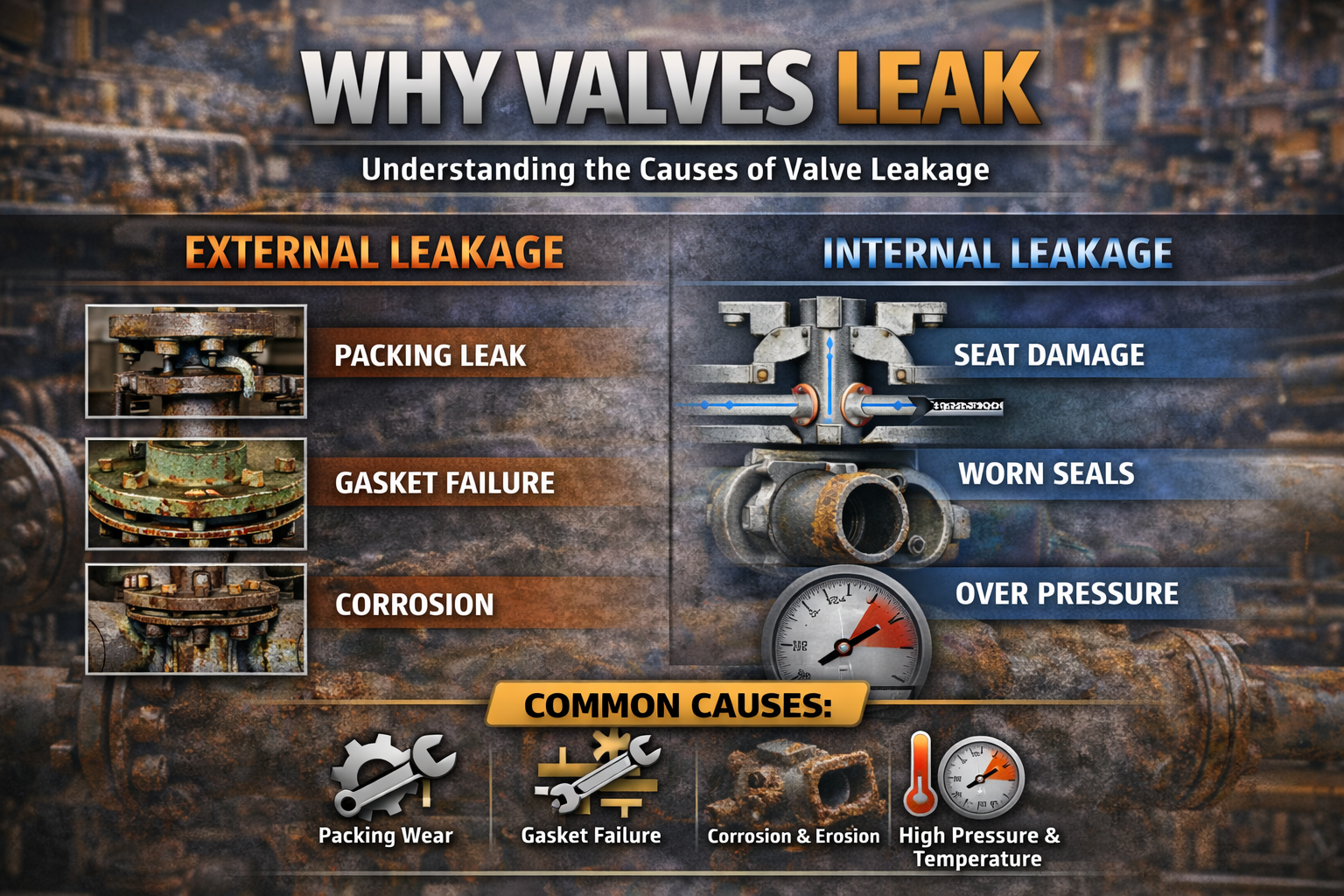
Why Valves Leak: The Real Reasons Behind a Common Industrial Problem
January 2, 2026
Read more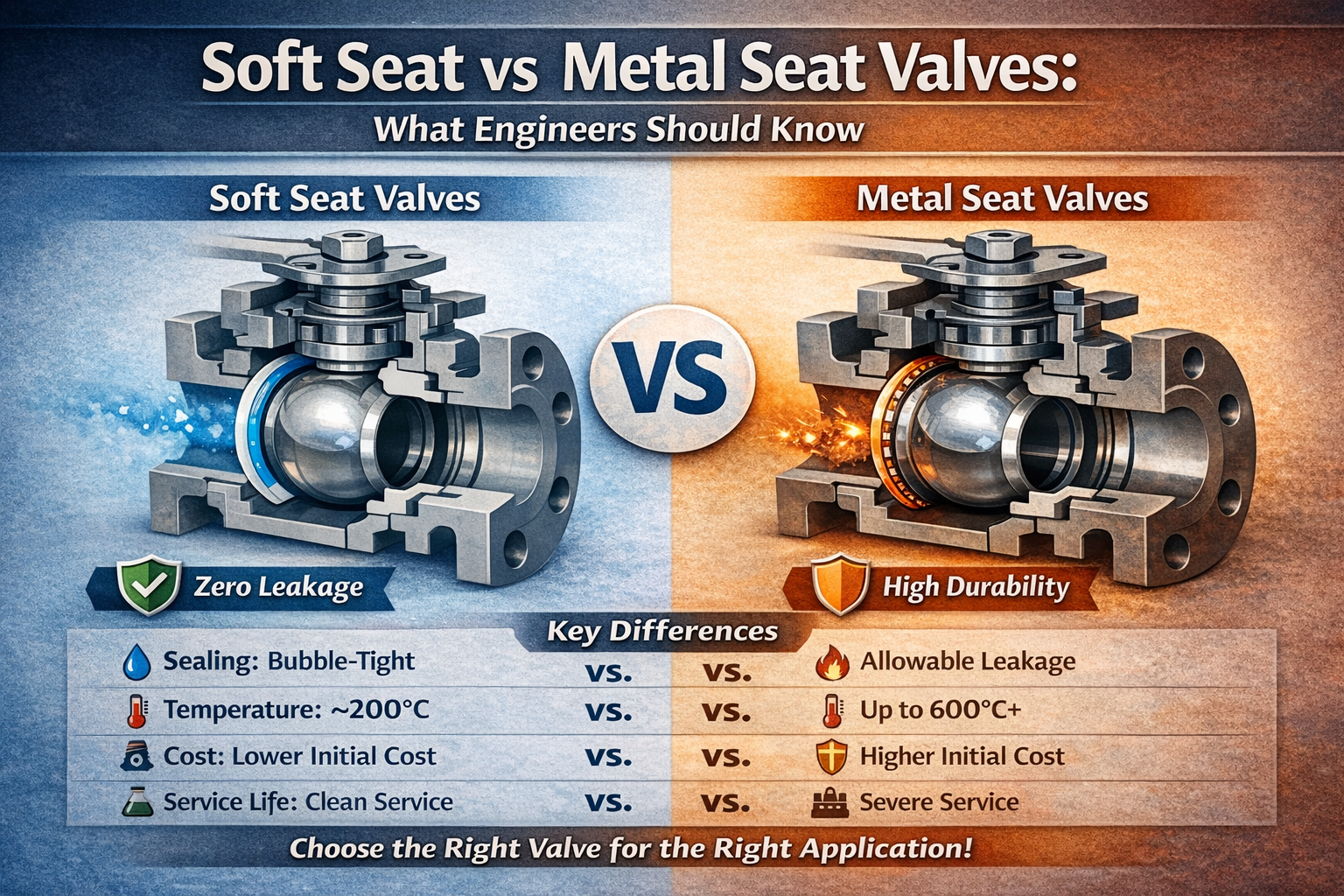
Soft Seat vs Metal Seat Valves: What Engineers Should Know
January 3, 2026
Read more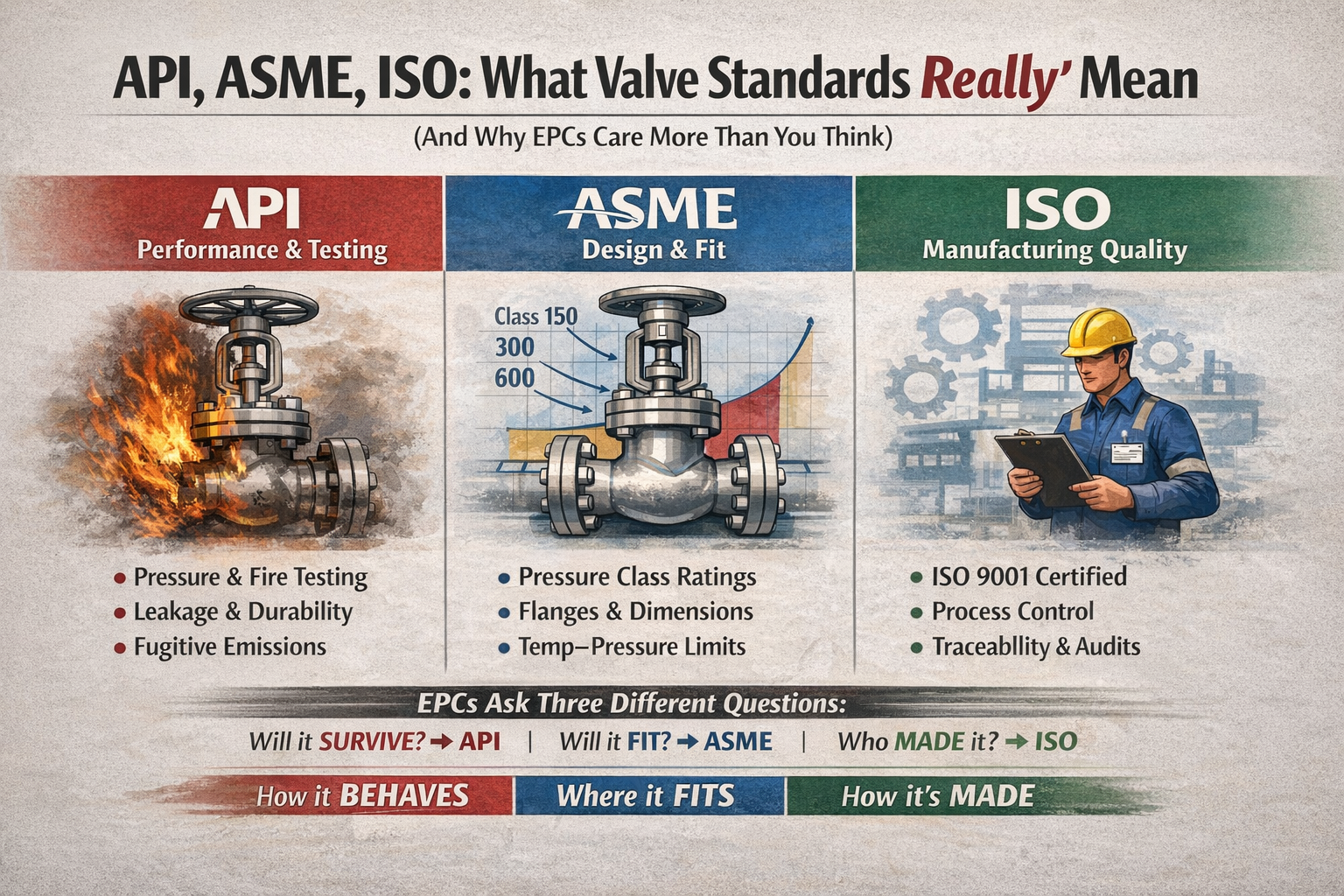
API, ASME, ISO: What Valve Standards Really Mean
January 4, 2026
Read more
Valve Selection Challenges in Oil & Gas Projects
January 5, 2026
Read more
Casting vs Forging
January 6, 2026
Read more
Valve Testing: What Tests Prove — and What They Don’t
January 8, 2026
Read more
10 Things Nobody Told You About Being a Web Designer
June 21, 2024
Read more
5 Web Design Blogs You Should Be Reading
June 21, 2024
Read more
7 Ways To Improve Website Usability And Accessibility
June 21, 2024
Read more
20 Myths About Web Design
June 28, 2024
Read more
Designers Who Changed the Web
June 21, 2024
Read more
The History Of Web Design
June 21, 2024
Read more
10 Great Examples of Responsive Websites
June 21, 2024
Read more
10 Quick Tips About Blogging
June 21, 2024
Read more
7 of the Best Examples of Beautiful Blog Design
June 21, 2024
Read more
