Create:
June 21, 2024
Valve Selection Challenges in Oil & Gas Projects
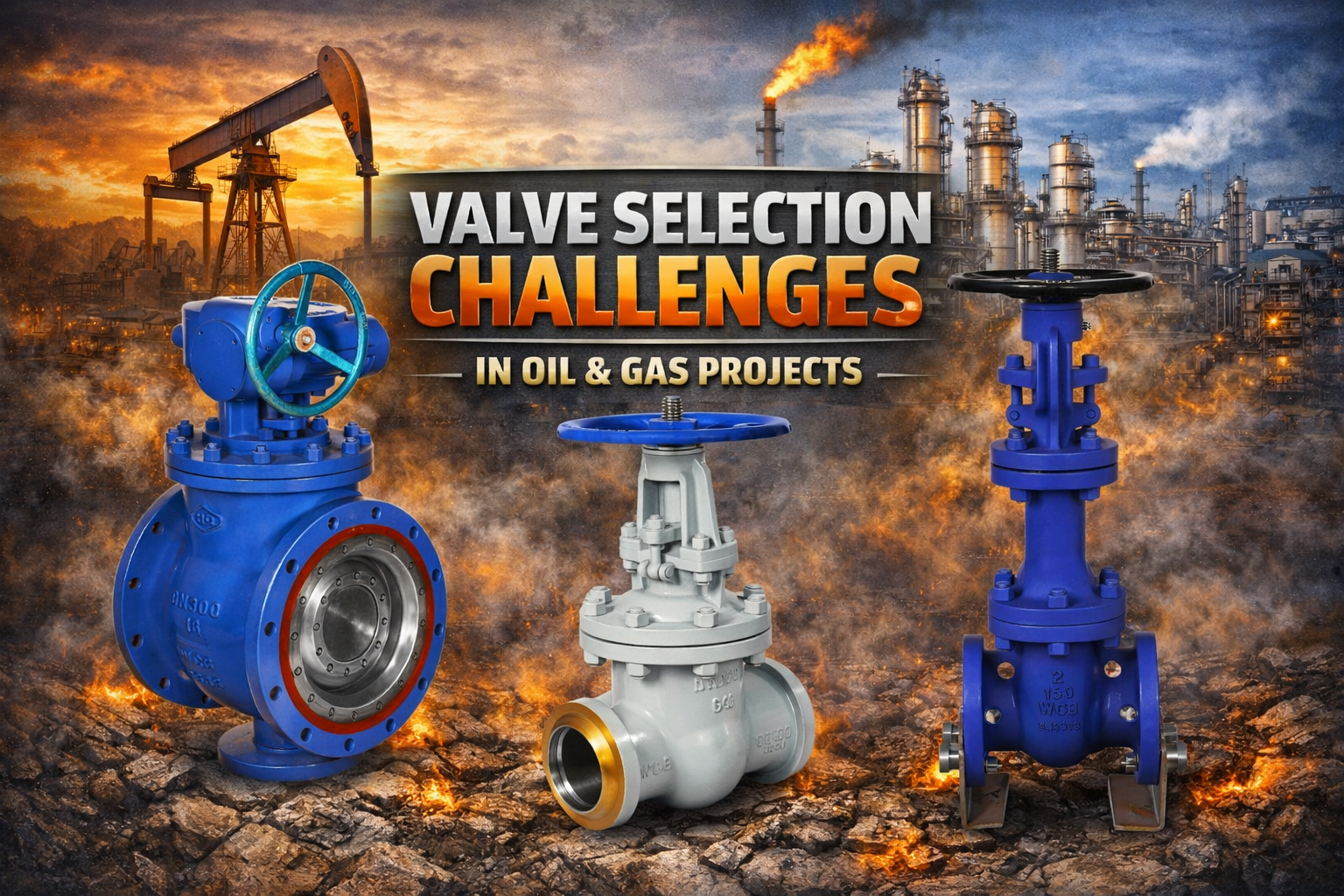
In oil & gas projects, valve selection is rarely just a technical decision. It sits at the intersection of process conditions, safety, standards, project execution, cost pressure, and long-term reliability. Many project delays, leaks, and disputes can be traced back to valves that were technically acceptable on paper but poorly matched to real operating conditions.
Below are the most common valve selection challenges engineers, EPCs, and procurement teams face—and how to think about them correctly.
1. Extreme Operating Conditions
Oil & gas services push valves to their limits.
Typical challenges
- High pressure (ANSI Class 600–2500)
- High temperature (continuous + transient)
- Sour service (H₂S)
- Abrasive media (sand, catalyst fines)
- Thermal cycling and pressure cycling
Common mistakes
- Selecting materials based only on design pressure, not operating duration
- Ignoring thermal fatigue and cyclic loading
- Using soft-seated valves where temperature fluctuates
Better approach
- Design for continuous service, not short-term rating
- Separate “pressure class” thinking from service severity
- Prefer metal-seated designs for harsh, unstable conditions
2. Material Selection Isn’t Just About Corrosion
Material choice is often oversimplified to “carbon steel vs stainless steel.”
Real material risks
- Sulfide stress cracking (SSC)
- Hydrogen-induced cracking (HIC)
- Chloride stress corrosion cracking
- Galling between trim components
Common mistakes
- Assuming “SS = corrosion resistant”
- Ignoring NACE requirements in sour service
- Mismatching trim hardness, causing galling or seizure
Better approach
- Match materials to specific damage mechanisms
- Review NACE, ISO, and project material specs carefully
- Consider trim combinations, not just body material
3. Standards Overlap and Interpretation Conflicts
Oil & gas projects rarely follow a single standard.
Typical stack
- API (design & testing)
- ASME (pressure class & dimensions)
- ISO (international harmonization)
- Company specifications (often stricter)
Common mistakes
- Assuming API compliance = full project compliance
- Ignoring client-specific testing add-ons
- Mixing standards inconsistently across valve types
Better approach
- Build a standard hierarchy early in the project
- Clarify which standard governs conflicts
- Align datasheets, ITPs, and inspection plans from day one
4. Actuation and Automation Mismatch
Valves don’t operate alone in oil & gas—they’re part of control systems.
Typical issues
- Undersized actuators
- Ignoring breakaway torque after aging
- Poor integration with ESD or control logic
Common mistakes
- Sizing actuator only for “clean, new valve”
- Forgetting worst-case ΔP and temperature
- Treating actuation as a procurement afterthought
Better approach
- Size actuators for end-of-life conditions
- Include safety margins for friction increase
- Coordinate valve + actuator + control philosophy early
5. Procurement Pressure vs Engineering Reality
Project schedules and budgets heavily influence valve choices.
Procurement-driven risks
- Switching suppliers late without re-validation
- Accepting “technically equivalent” without full review
- Over-prioritizing delivery time over service suitability
Common mistakes
- Treating valves as interchangeable commodities
- Ignoring long-term OPEX for short-term CAPEX savings
- Weak technical bid evaluations
Better approach
- Lock critical valve specs early
- Classify valves by criticality, not just size or price
- Maintain a qualified vendor list (AVL) discipline
6. Installation and Maintenance Blind Spots
A valve that works in theory may fail in the field.
Typical problems
- No access for maintenance
- Orientation causing sediment buildup
- Inadequate support leading to misalignment
Common mistakes
- Designing valves without maintenance scenarios
- Ignoring piping stress and support loads
- Overlooking site-specific installation constraints
Better approach
- Involve operations & maintenance early
- Review valve orientation and accessibility
- Treat valves as operational assets, not line items
7. Lifecycle Thinking Is Often Missing
Oil & gas valves are expected to last decades.
What’s often ignored
- Seat wear and erosion rates
- Packing adjustment cycles
- Spare parts availability after commissioning
Common mistakes
- Selecting valves only to pass FAT
- No plan for spare trims or seal kits
- No documentation for future replacements
Better approach
- Evaluate total cost of ownership (TCO)
- Standardize valve types where possible
- Ensure long-term support and traceability
Final Thoughts: Valve Selection Is a Risk Management Exercise
In oil & gas projects, valve selection is not about choosing a brand or ticking a standard—it’s about managing risk across the entire lifecycle:
- Safety risk
- Operational risk
- Schedule risk
- Cost risk
The most successful projects treat valves as critical engineered components, not commodities. Early engineering involvement, clear specifications, disciplined procurement, and lifecycle thinking are what separate smooth startups from costly failures.
Latest news

Leadership Philosophy
February 14, 2025
Read more
Major Mission
December 25, 2024
Read more
Market Trends in the Valve Industry: Key Developments and Projections for the Next Five Years
December 26, 2024
Read more
Most Valve Failures Are Material Failures, Not Design Failures
December 29, 2025
Read more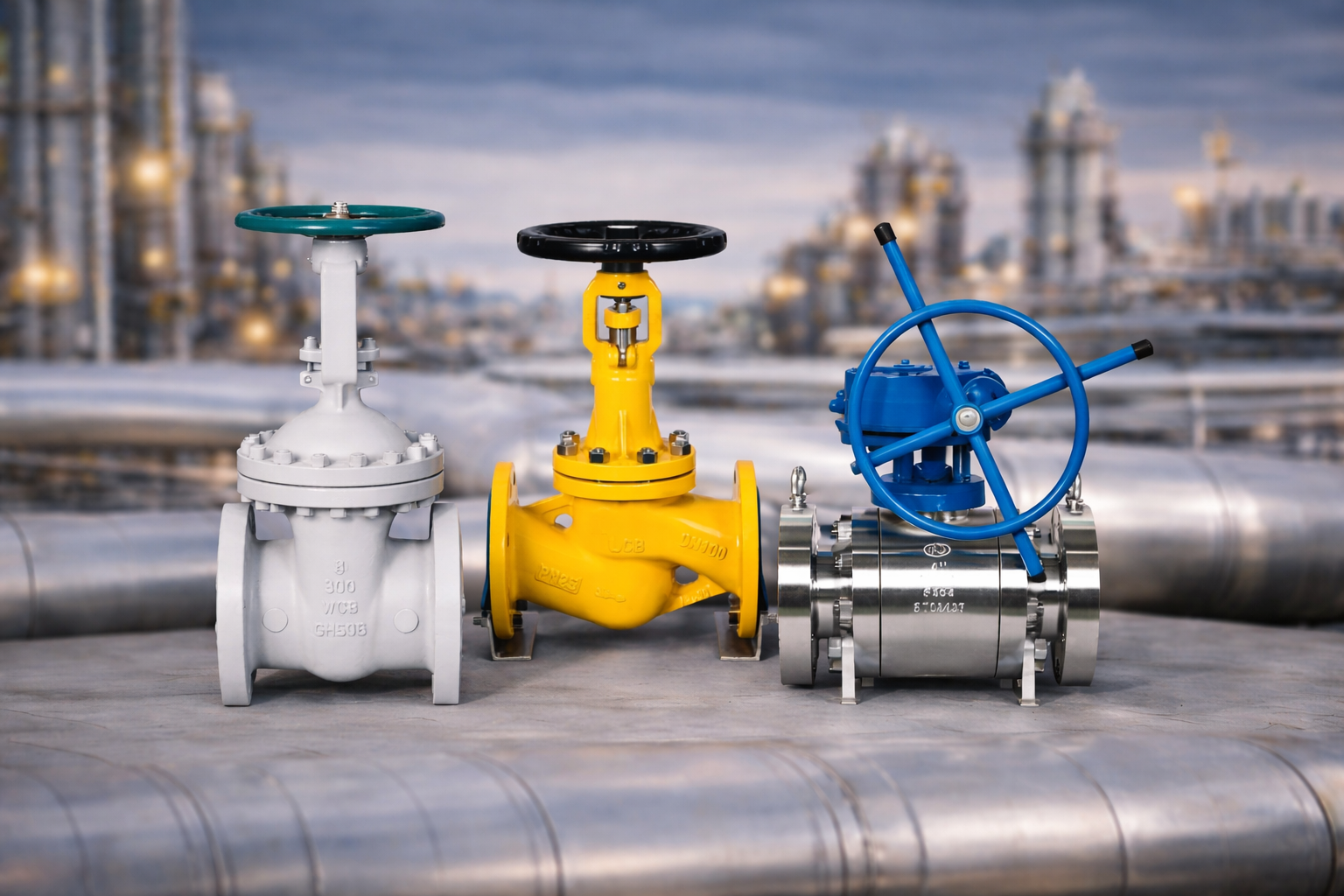
The Six Main Types of Industrial Valves — and When to Use Them
December 30, 2025
Read more
Why Gate Valves Should Not Be Used for Throttling
December 30, 2025
Read more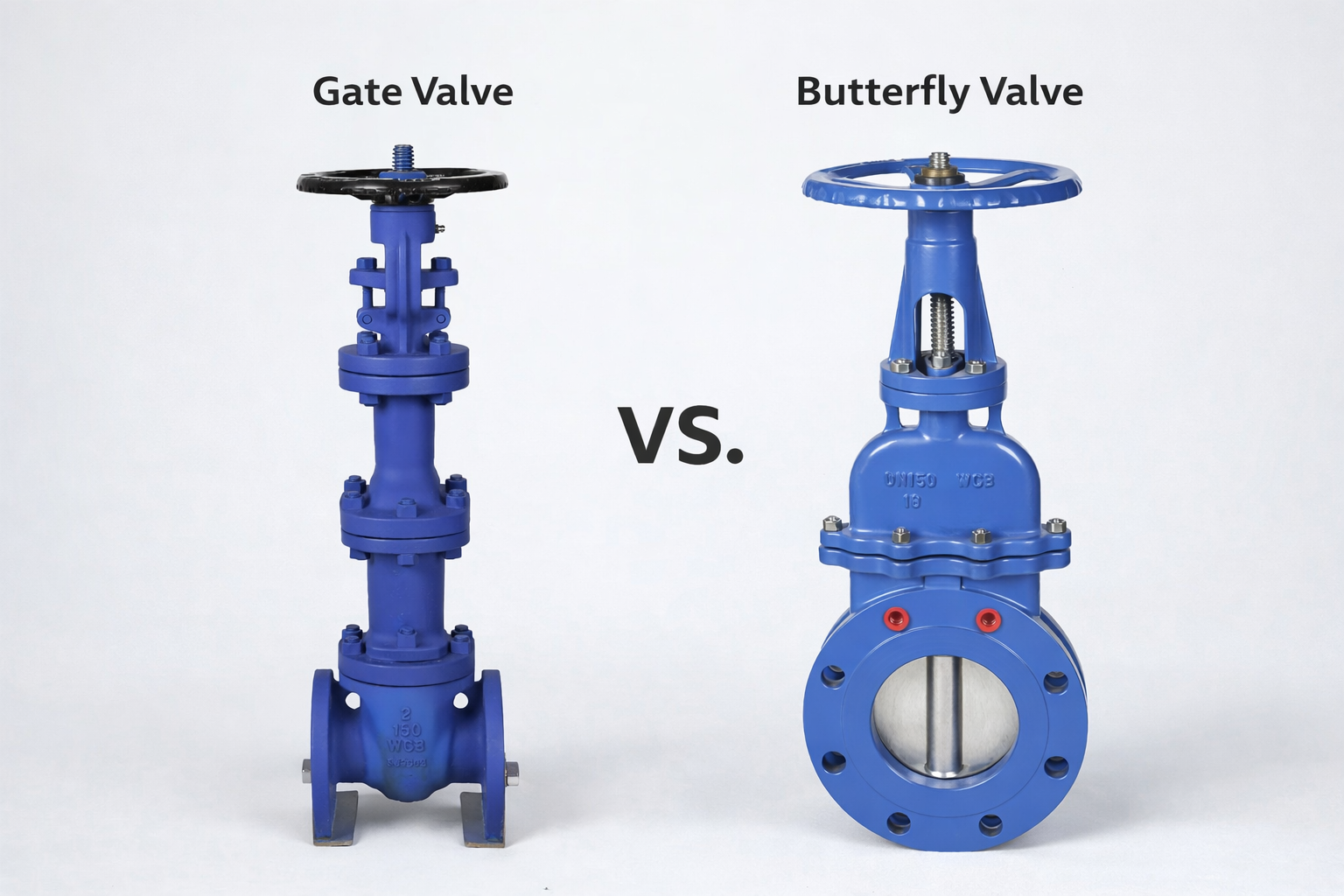
Butterfly vs Gate Valves: Choosing the Right Valve for Large Pipelines
January 1, 2026
Read more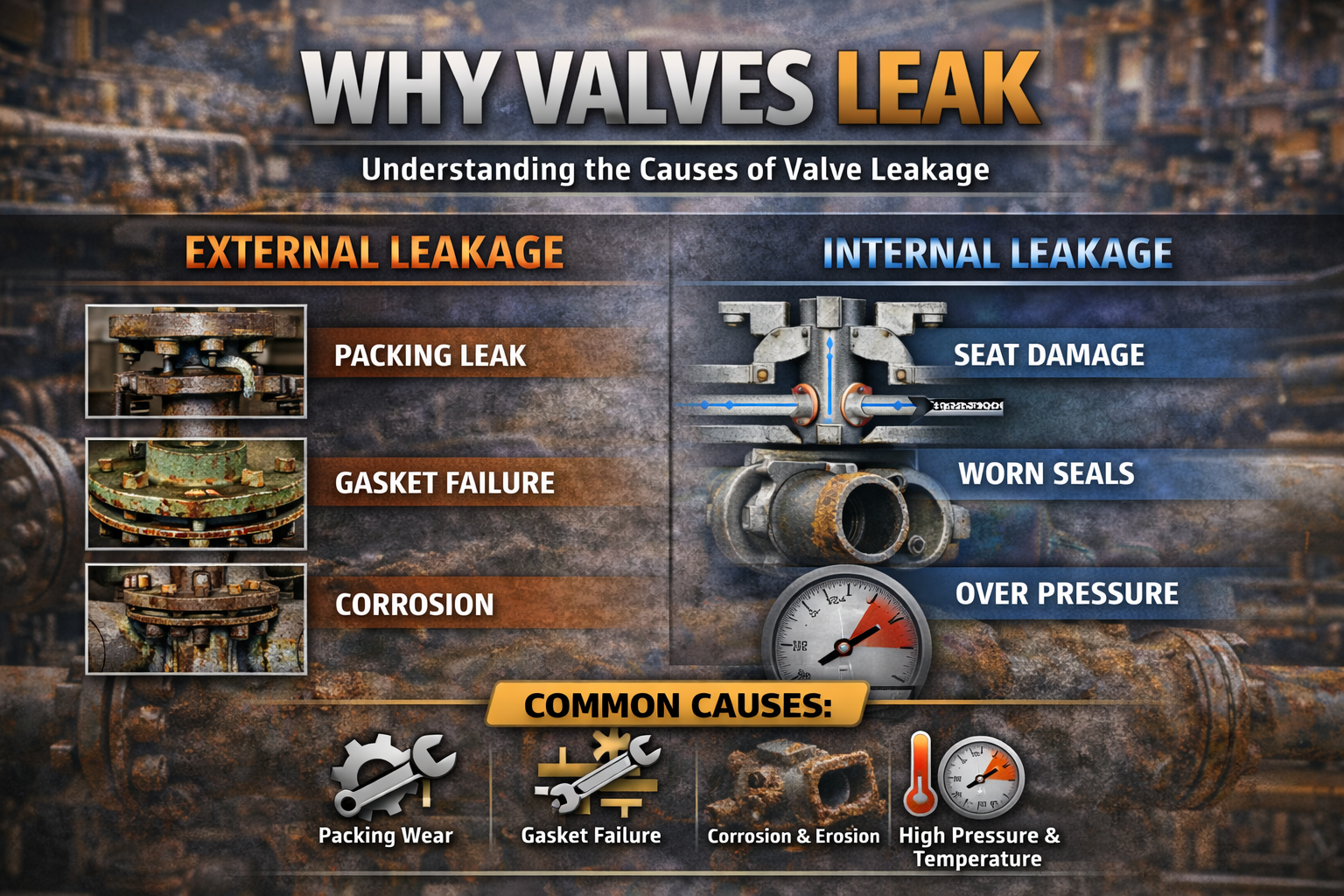
Why Valves Leak: The Real Reasons Behind a Common Industrial Problem
January 2, 2026
Read more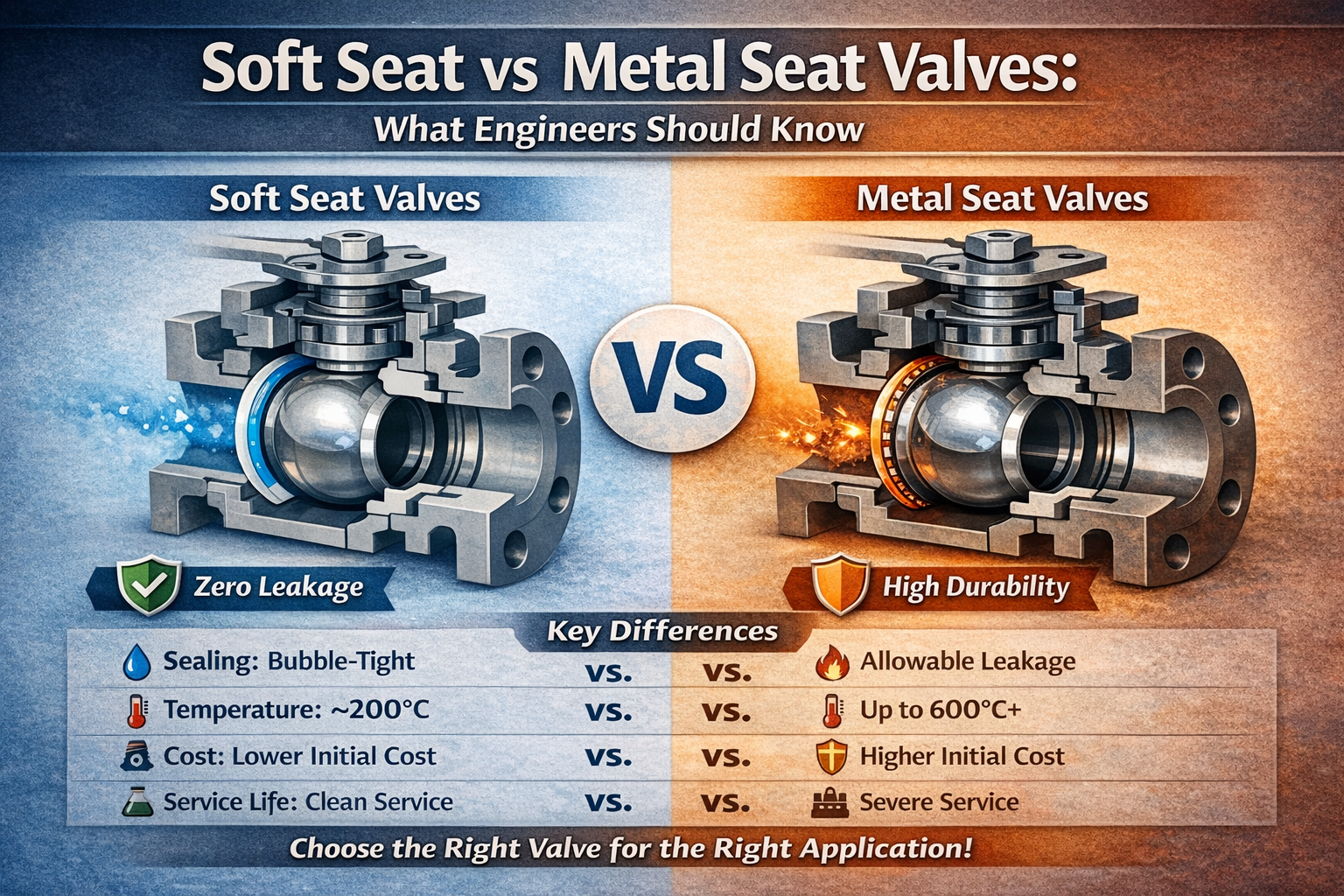
Soft Seat vs Metal Seat Valves: What Engineers Should Know
January 3, 2026
Read more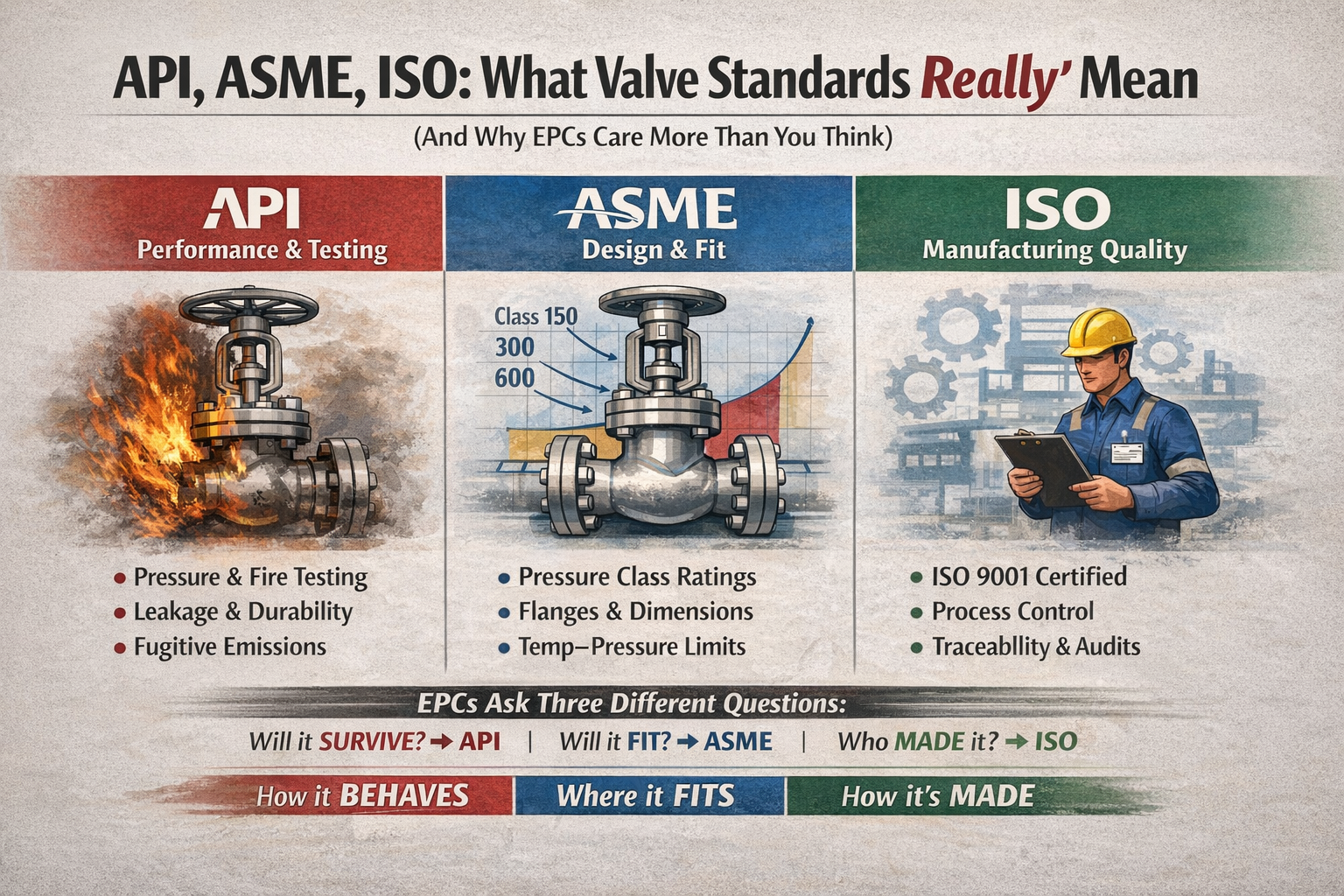
API, ASME, ISO: What Valve Standards Really Mean
January 4, 2026
Read moreValve Selection Challenges in Oil & Gas Projects
January 5, 2026
Read more
Casting vs Forging
January 6, 2026
Read more
Valve Testing: What Tests Prove — and What They Don’t
January 8, 2026
Read more
10 Things Nobody Told You About Being a Web Designer
June 21, 2024
Read more
5 Web Design Blogs You Should Be Reading
June 21, 2024
Read more
7 Ways To Improve Website Usability And Accessibility
June 21, 2024
Read more
20 Myths About Web Design
June 28, 2024
Read more
Designers Who Changed the Web
June 21, 2024
Read more
The History Of Web Design
June 21, 2024
Read more
10 Great Examples of Responsive Websites
June 21, 2024
Read more
10 Quick Tips About Blogging
June 21, 2024
Read more
7 of the Best Examples of Beautiful Blog Design
June 21, 2024
Read more
